
Revolutionizing Software Testing with AI: 6 Key Benefits for Your Business (Part 1)
In today's fast-paced software development landscape, ensuring the quality of applications is more critical than ever. As applications become increasingly complex, traditional testing methods often struggle to keep up with the demands of rapid development cycles. This is where AI-augmented testing comes in. By leveraging artificial intelligence, software testing can be significantly enhanced, leading to improved efficiency, accuracy, and test coverage.
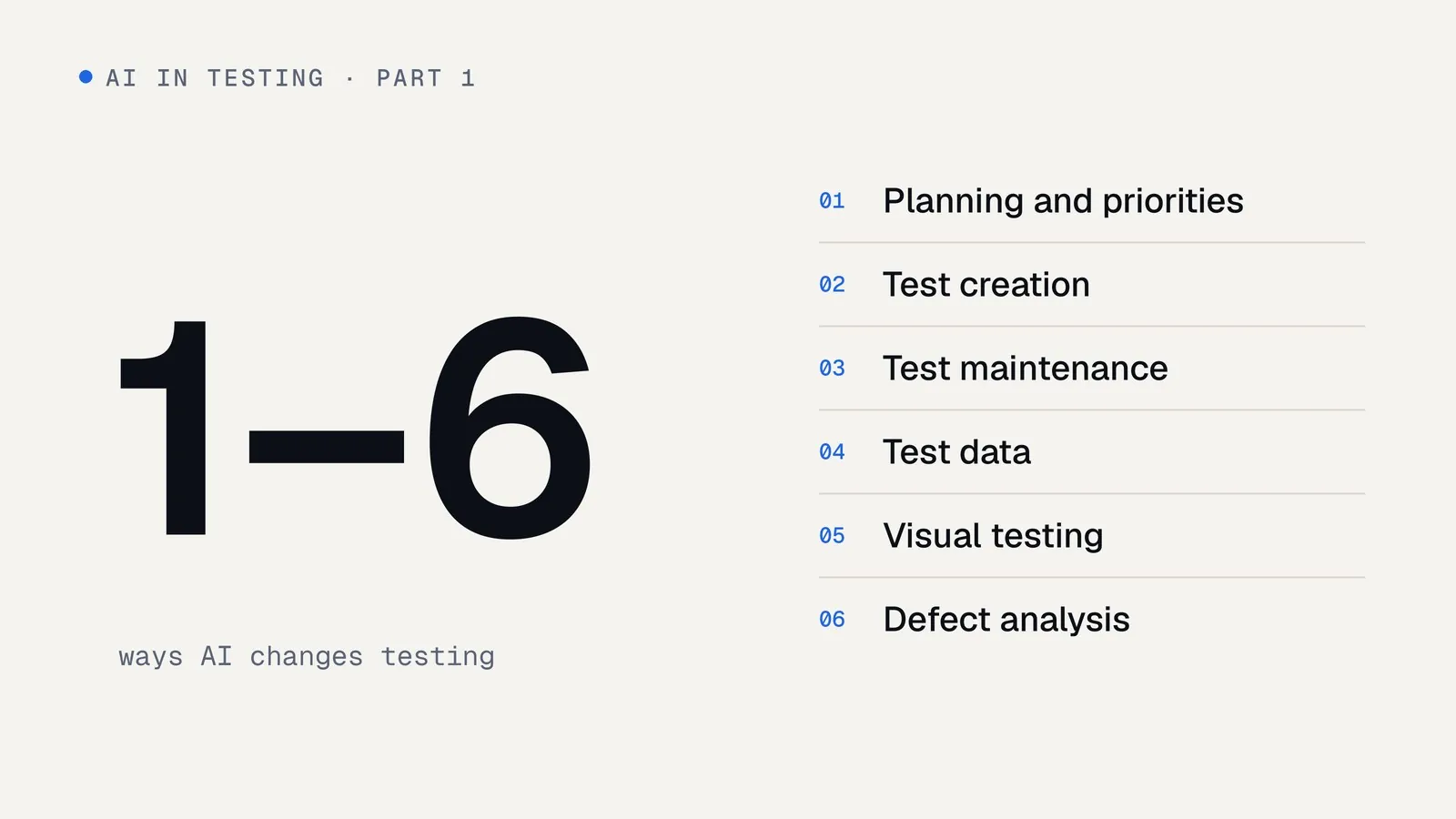
This blog post is the first in a series that will explore the key areas where AI can revolutionize software testing. In this part, we will focus on six key benefits:
1. Test Planning and Test Prioritization
AI can optimize test planning by identifying the most critical areas of an application that need testing. By analyzing historical data, user behavior, and code complexity, AI algorithms can pinpoint high-risk areas and prioritize tests accordingly. This ensures that testing efforts are focused on the parts of the application that are most likely to have defects, improving efficiency and effectiveness.
2. Test Creation
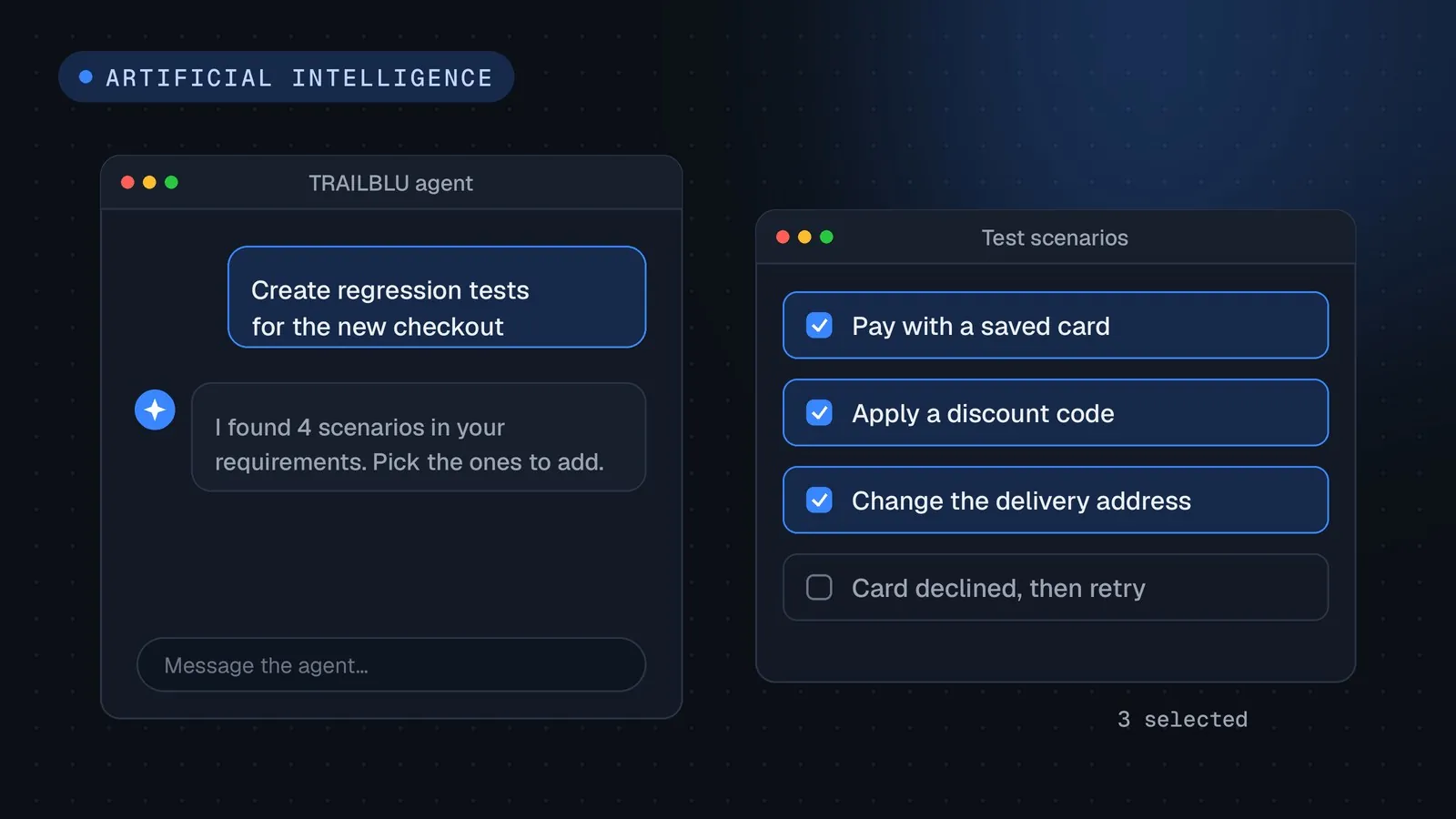
Creating test cases can be a time-consuming and error-prone process. AI can help by automatically generating test cases from requirements, user stories, and existing test suites. This automation not only saves time but also ensures comprehensive coverage by considering all critical paths and potential scenarios.
3. Test Maintenance

Maintaining test cases is one of the most challenging aspects of UI testing, especially as applications evolve. Changes in the UI, such as element IDs or structure, can cause tests to fail even if the application is functioning correctly. AI self-healing mechanisms can address this issue by dynamically updating and adapting test scripts when UI changes occur. For instance, if an element's identifier changes, the AI can recognize the element based on other attributes and update the test script accordingly. This reduces the maintenance burden and ensures that tests remain robust against UI changes. Additionally, self-healing can help identify and fix flaky tests, which are tests that pass and fail inconsistently without changes in the code.
4. Test Data Generation
Generating diverse and representative test data is crucial for comprehensive testing. AI can assist in this area by creating synthetic data, which is artificially created rather than obtained from real-world observations. This data can be generated using various methods, including statistically rigorous sampling from real data, semantic approaches, and Generative Adversarial Networks (GANs). Alternatively, data can be created by simulating scenarios where models and processes interact to produce entirely new datasets of events. By leveraging AI for test data generation, software engineering teams can ensure that testing covers a wide range of possible scenarios, improving test coverage and robustness.
5. Visual Testing
Visual testing uses AI to evaluate the visible output of an application and compare it against the expected results. Unlike traditional testing methods that rely on specific assertions, visual testing mimics what a human tester would see when things don't "look right." For example, it can detect issues such as text not rendering properly or elements being partly offscreen. Visual testing is particularly relevant for testing non-standard user interfaces, such as those not confined to web, mobile, or desktop applications.
6. Test and Defect Analysis
AI can significantly impact test and defect analysis in the following ways:
- Automatic Defect Classification: AI can triage defects early and improve accuracy in future defect classification using self-learning algorithms and intelligent classification techniques.
- Defect Prediction: By leveraging machine learning (ML) and natural language processing (NLP) techniques to detect patterns in historical quality assurance (QA) data, AI can identify gaps in quality and defect targets, minimize redundancy, and enhance the effectiveness and efficiency of testing processes.
Conclusion
As applications become more complex, the role of AI in software testing will become even more critical. By leveraging AI in the six key areas discussed above, software engineering teams can ensure faster, more accurate, and more efficient testing processes, ultimately leading to higher-quality software.
In the next part of this blog series, we will explore additional benefits of AI-augmented testing and discuss future trends in this rapidly evolving field. Stay tuned for more insights on how AI is revolutionizing software testing!