
Revolutionizing Software Testing with AI: Expanding the Horizons (Part 2)
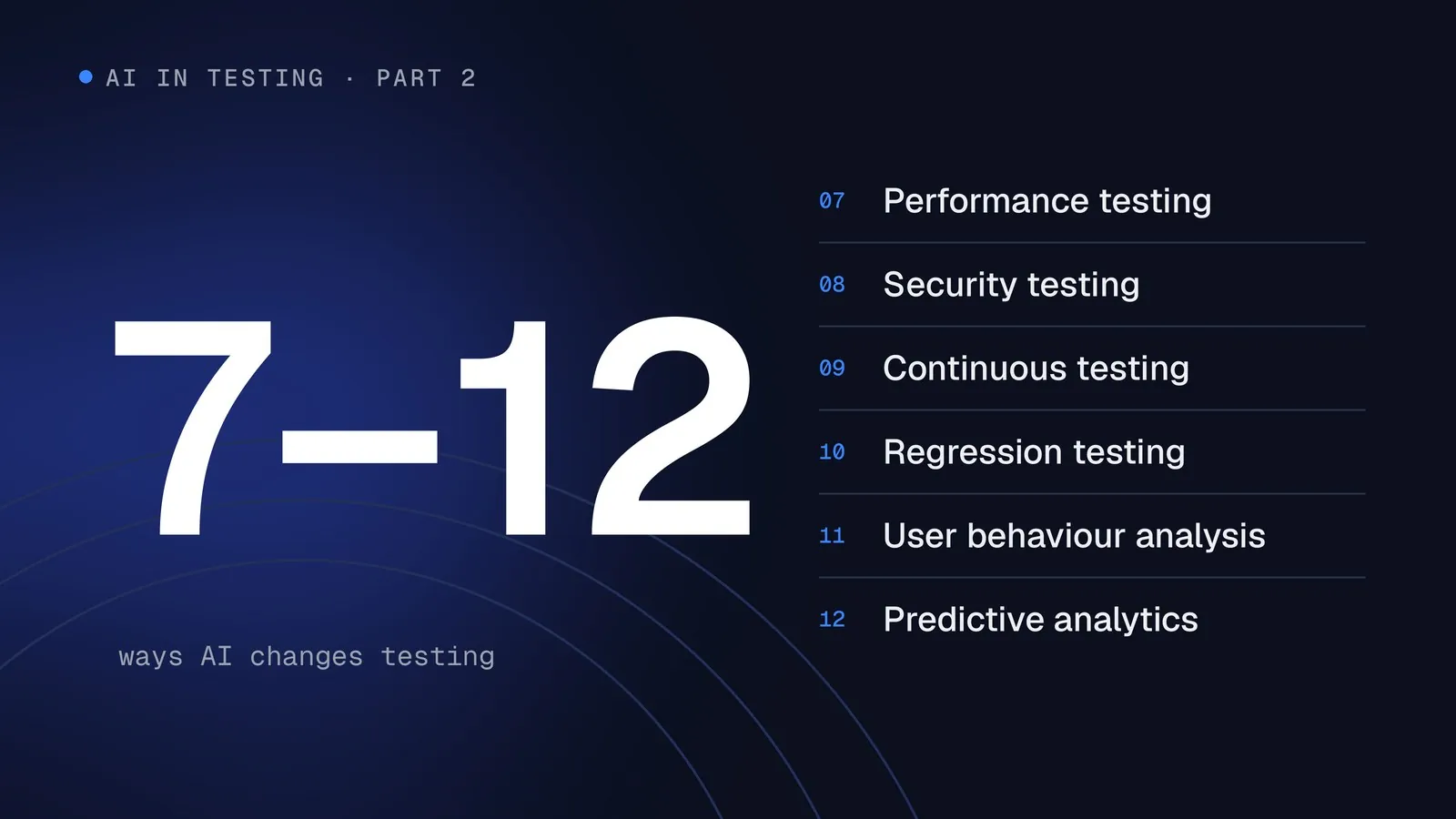
In the first part of this series, we explored six key ways AI is transforming software testing, bringing efficiency, accuracy, and broader coverage to the forefront. As we delve deeper, it becomes evident that AI's impact extends even further, permeating various testing domains and practices.
7. Performance Testing
AI can significantly enhance performance testing by identifying bottlenecks and predicting potential issues before they impact users. By analyzing performance metrics and historical data, AI algorithms can pinpoint areas where the application might struggle under heavy load or specific usage patterns. This proactive approach allows developers to optimize performance and prevent costly downtime.
8. Security Testing
Security vulnerabilities can have severe consequences. AI can bolster security testing by identifying vulnerabilities and potential attack vectors that might be missed by traditional methods. Machine learning algorithms can analyze code and network traffic to detect anomalies and patterns indicative of security risks, helping to fortify the application against potential threats.
9. Continuous Testing
In the era of continuous integration and continuous deployment (CI/CD), AI plays a crucial role in enabling continuous testing. By seamlessly integrating with CI/CD pipelines, AI can trigger automated tests whenever code changes are committed. Moreover, AI can intelligently select the most relevant tests based on the nature of the changes, ensuring rapid feedback without compromising thoroughness.
10. Regression Testing
Regression testing is essential to ensure that new code changes don't inadvertently break existing functionality. AI can optimize this process by identifying the minimum set of test cases needed to validate the changes effectively. By analyzing code dependencies and historical test data, AI algorithms can pinpoint the most relevant tests, saving time and resources while maintaining confidence in the application's stability.
11. User Behavior Analysis
Understanding how users interact with an application is invaluable for testing. AI can analyze user behavior data to identify patterns, preferences, and pain points. This information can guide testing efforts toward the most critical user flows and functionalities, ensuring that the application meets user expectations and delivers a seamless experience.
12. Predictive Analytics for Testing
AI can leverage predictive analytics to forecast potential defects and testing outcomes. By analyzing historical testing data, code metrics, and other relevant factors, AI algorithms can identify areas of the application that are more likely to harbor defects. This predictive capability allows teams to allocate testing resources more effectively, focusing on areas with higher risk and preventing defects from reaching production.
Conclusion
The integration of AI into software testing is not merely an enhancement; it's a paradigm shift. By extending AI's capabilities beyond the foundational benefits explored in Part 1, we unlock new dimensions of testing efficiency, effectiveness, and proactivity. As AI continues to evolve, its impact on software testing will only deepen, leading to higher quality applications, faster release cycles, and greater user satisfaction.
In future installments of this series, we'll delve into specific AI testing tools and techniques, showcasing real-world examples of how AI is reshaping the testing landscape across industries. Stay tuned as we continue to explore the exciting frontiers of AI-augmented software testing!